






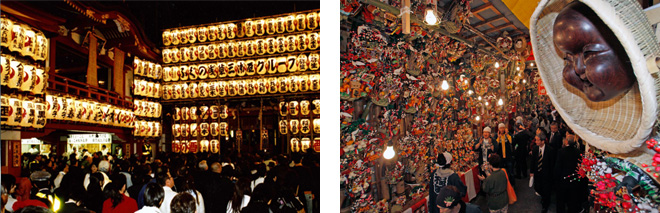
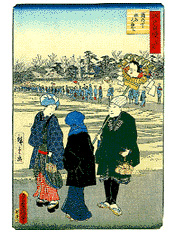
"Tori-no-Ichi"Festivals of Ohtori Shrine in Asakusa,Tokyo are held twice or thrice every November since the Edo era.(the Chistian era 1750-1760)
The Festivals appellation is called first Festival "Ichinotori",the second Festival "Ninotori",the third Festival "Sannotori". The origin of "Tori-no-Ichi" Festivals of the Japanese mythology of the Ameno-Hiwashino-Mikoto and the Yamato-Takeruno-Mikoto are worshiping as god,also the Ohtori Shrine commonly are called "Otori-Sama" and the Festivals on the days be bustling by worshipers,that days celebrate the Festival all day long. And this worship is that invoke a providence,give thanks to a divine favour,both it is that pray good fortune and good news in future and keep out of harm's way.
They are brought about its when we live the daily life purely,righteously,vigorously,harmoniously. Then the 300 rake stalls in the yard of the Ohtori Shrine sold lucky rakes decorated with colorful symbols of good fortune,believed to bring wealth to the purchasers.

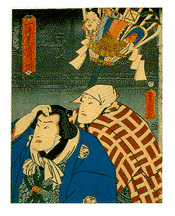
"Haru wo matsu,
Koto no hajime ya,
Tori-no-Ichi"
by TAKARAI,Kikaku(Haiku)
Counted as one of Basho's ten great students,he is famous for his fresh and penetrating insights into the society of the Edo.
The "Tori-no-Ichi" Festivals occurred several times in the end of the year. It was the one time all year that the gates of the Yoshiwara Pleasure district were opened to let the public in to walk its streets. Without the "Tori-no-Ichi" market,the small merchants and farmers would not be able to pay off their annual debts. At the same time,goods bought at this market--good luck charms,food-stuffs,etc.--constitute the first shopping in preparation for new year celebrations. While being the last big event of the year,it is also the first event in the course of new years preparations. It thus forms the bridge,both economic and psychological,between the old and new years,emphasizing the continuum of time in society from year to year.